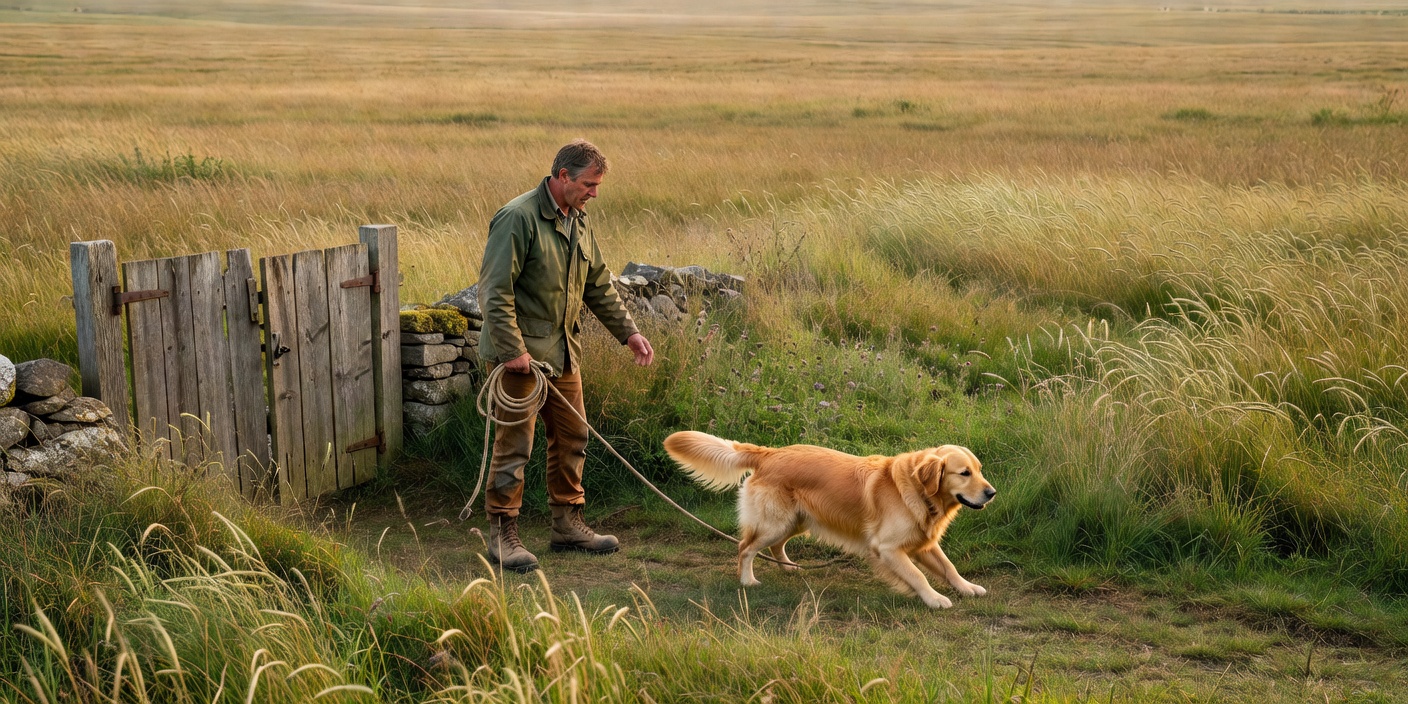
The Complexity of Natural Outdoor Arenas
Indoor facilities reduce sensory competition. They provide static temperatures, flat rubber matting, and fixed visual boundaries. The countryside is dynamic. A single gust of crosswind carries prey scent from 200 meters away. Mud, uneven hill gradients, and tall hedgerows drastically modify how a dog perceives handler movement and commands.
A rigorous countryside program does not simply walk dogs across grass. It utilizes terrain features to test and deepen canine cognitive flexibility. By introducing field challenges gradually, dogs learn to dismiss background environmental noise and stay attuned to their handler's quiet signals.
Environmental Stimulus Progression
Field curricula use progressive tiers of environmental exposure to prevent overwhelming the canine nervous system:
Tier 1: Enclosed Secure Paddock
High post-and-rail fencing with fine mesh backing. Handlers work on loose leash mechanics and mid-distance recall with minimal ground disturbance.
Tier 2: Agricultural Hedgerow Margins
Moving along defined field boundaries where pheasant scents, rabbit tracks, and ditch flora provide moderate olfactory distraction.
Tier 3: Open Common Land & Trails
Unfenced bridleways featuring irregular elevation changes, pedestrian encounters, and distant tractor operations requiring handler-focused heel walking.
Equipment Planning for Working in the Elements
Rural training demands specialized gear that guarantees safety without impeding canine biomechanics. Standard retractable tape leashes and nylon flexi-leads are strictly avoided due to injury hazards and lack of tactile control.
- Biothane Long Lines (10m and 15m): Biothane does not absorb water, resist burrs, or knot when dragged through undergrowth. It provides handlers with consistent grip even in pouring rain.
- Y-Front Padded Harnesses: Distributes physical tension across the sternum without restricting shoulder range of motion during sudden stops.
- High-Frequency Ultrasonic or Pealess Field Whistles: Sound carries across wind shears where human vocal commands disperse and become inaudible.
- Treat Pouches with Weather Seals: Keeps high-value food items dry during persistent drizzle and accessible within one second of desired behavior.
Managing Rural Hazards: Livestock and Wildlife
Livestock safety is paramount in any countryside setting. Legal statutes in agricultural areas strictly penalize canine harassment of sheep, cattle, or ground-nesting birds. Under no circumstances should unfamiliar dogs be granted off-leash freedom near agricultural boundaries.
Training programs utilize secure observation distances (minimum 80 meters) to gauge a dog's predatory motor pattern. Dogs are taught neutral disengagement—looking at livestock, immediately turning their head back toward the handler, and receiving reinforcement for calmness. If a dog becomes fixated, handlers immediately increase distance rather than pulling or shouting.
Good For
- High-drive sporting, hound, or working breeds whose instincts are easily triggered by outdoor movement.
- Handlers who frequently hike, camp, or live in rural villages and require rock-solid trail etiquette.
- Pairs that have plateaued in quiet indoor obedience classes and need realistic distraction testing.
What to Know
- Cold, damp conditions cause muscular stiffness; warm-up walking and post-session toweling are vital.
- Ticks and seasonal burrs require full physical body checks after every field session.
- Never allow dogs off-leash in unfenced rural territory until solid whistle recall has been tested in high-distraction environments for months.
Physical Recovery After Field Work
Running through uneven meadow furrows engages stabilizing muscles that remain dormant on flat suburban asphalt. Handlers must monitor their dogs for signs of micro-fatigue: shortening strides, delayed responsiveness, or sudden frantic sniffing. Scheduled rest intervals prevent musculoskeletal strain and preserve enthusiasm for subsequent sessions.