Assessing Dog Suitability and Baseline Health
A training retreat places unusual demands on a dog's musculoskeletal system and nervous system. Before booking any extended program, arrange a veterinary physical checkup. Undetected orthopedic conditions, such as early-stage hip dysplasia, elbow osteoarthritis, or soft-tissue strains, will flare up under repeated field drills, resulting in reactive or defensive behaviors often misinterpreted as stubbornness.
Handlers must honestly evaluate their dog's emotional resilience. Dogs exhibiting intense barrier frustration, acute separation anxiety, or human-directed fear require clinical one-on-one interventions rather than an intensive multi-day group retreat venue.
Vetting a Retreat Facility: Essential Inquiries
Never commit to a retreat facility without verifiable operational answers. Demand specifics on spatial boundaries, emergency procedures, and trainer qualifications:
Facility Infrastructure Questions
- Are fields perimeter-fenced to a minimum height of 1.8 meters?
- Are lodging cottages structurally separated to prevent fence-line fence fighting?
- Is there dedicated refrigeration for raw or temperature-sensitive diets?
Methodological & Safety Questions
- What is the strict policy on aversive equipment (e-collars, prongs, slip leads)?
- What is the emergency protocol and travel time to the nearest 24-hour veterinary hospital?
- What is the maximum instructor-to-handler ratio during working field hours?
Nutritional Continuity and Digestive Stability
Travel and intensive training can disrupt canine digestion. Switching dog foods or introducing large quantities of novel treats during a retreat is a primary cause of gastrointestinal upset. Pack the dog's standard kibble, raw portions, or wet food in pre-portioned daily bags with 2 days of extra contingency reserves.
For high-value training reinforcers, use freeze-dried single-ingredient proteins (beef lung, salmon, or chicken heart) that do not strain digestion or cause dehydration. Ensure dogs have continuous access to fresh water inside their accommodation quarters.
Master Packing Protocol
Review this checklist four weeks prior to travel and verify every item is packed 48 hours before departure:
- Veterinary Documentation: Full vaccination records, microchip number, titer test results (if applicable), and emergency contact authorization forms.
- Rest and Bedding: The dog's familiar crate, orthopedic bed, or sleeping blanket unwashed from home. Scent familiarization significantly accelerates first-night sleep settling.
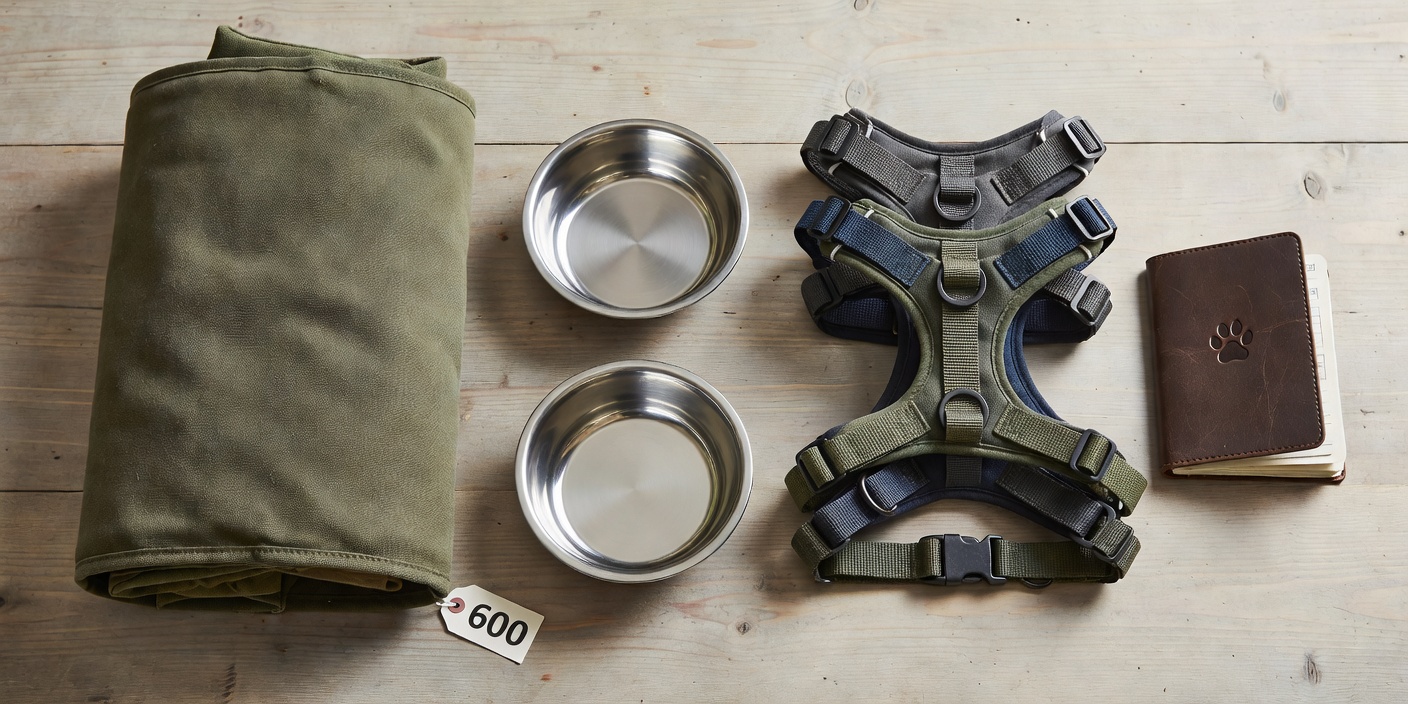
- Working Equipment: 2 standard flat collars, 1 fitted Y-harness, 1 short 1.5m lead, 1 long 10m biothane line, 1 hands-free waist lead, and 2 treat pouches.
- Cleaning & Maintenance: Quick-drying microfiber towels, non-irritating dog shampoo, tick removal hooks, digital canine thermometer, and paw balm for coarse field grass.
- Handler Apparel: Waterproof trail boots, layered wool base layers, high-visibility vest, and all-weather tactical gloves for leash grip.
Good For
- Handlers planning their first residential canine workshop.
- Multi-dog households determining which individual canine will benefit most from focused training.
- Owners seeking structured accountability and measurable progress benchmarks.
What to Know
- Never introduce new equipment (such as a new harness model) on the morning of arrival; desensitize the dog to all gear at home first.
- Plan rest stops every 2 hours during long vehicle transit to allow relief, light hydration, and leg stretching.
- Avoid feeding a full meal within 3 hours prior to car transit to prevent motion sickness.
Arrival Scheduling and Transition Windows
Target arrival during daylight hours. Rushing into an unfamiliar countryside room in pitch darkness spikes canine vigilance. Arriving mid-afternoon allows 45 minutes for a relaxed, slow decompression walk on a long line around the perimeter, followed by quiet crate rest while handlers unload supplies.